The Secret Joy of Irish Games: How Hurling, Road Bowling and Pub Night Quirks Keep a Nation Connected
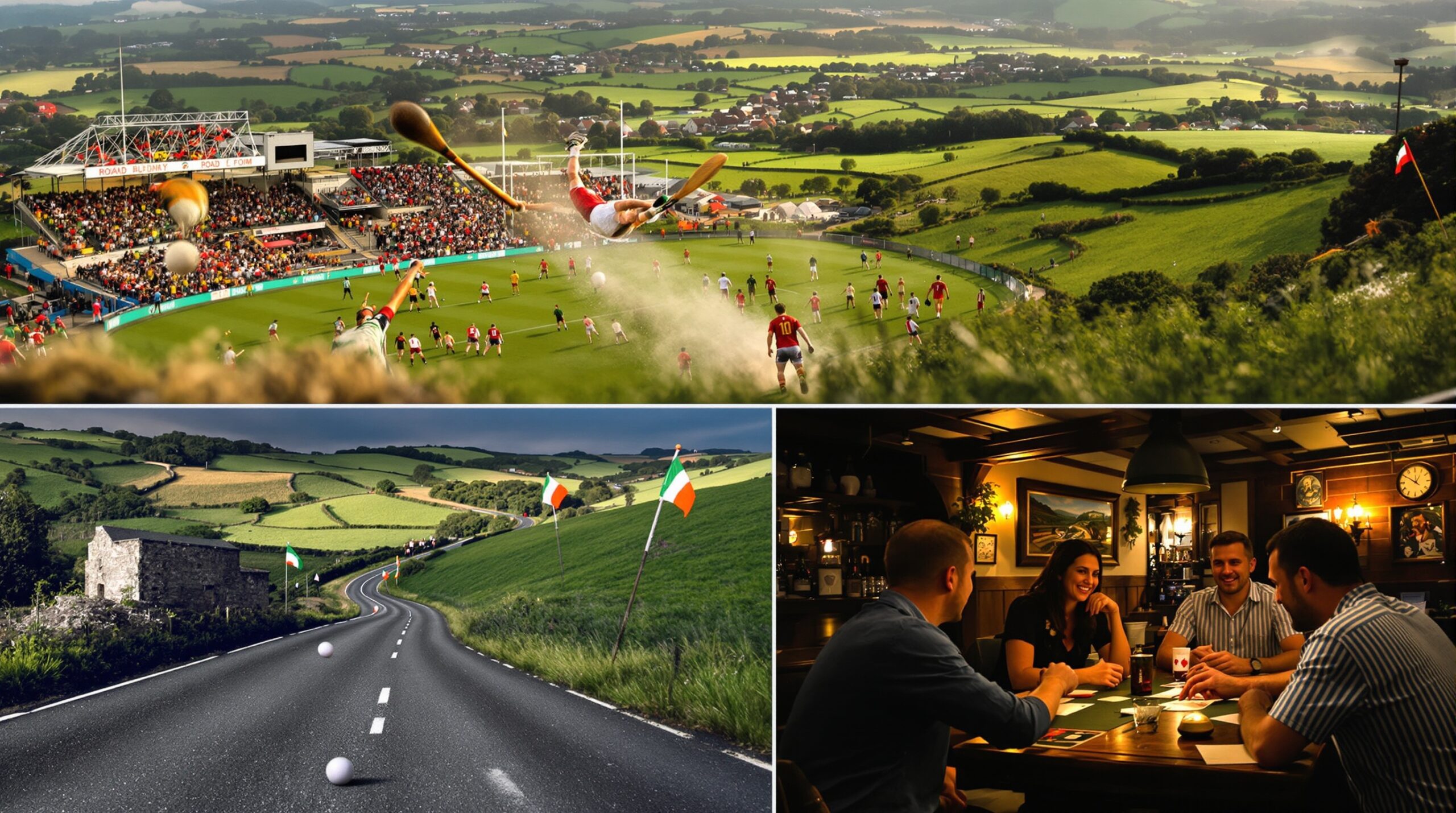
The Secret Joy of Irish Games: How Hurling, Road Bowling and Pub Night Quirks Keep a Nation Connected
Irish games are more than sport or pastime. They are living traditions that bind communities, celebrate local identity, and keep centuries of playfully fierce competition alive. From the thunderous pace of hurling to the intimate charm of a pub card table, Irish games tell the story of a country that loves to play — together.
Gaelic games: Ireland’s heartbeat
At the center of Irish sporting life are the Gaelic games, organized and promoted by the Gaelic Athletic Association, founded in 1884 to revive and protect native sports. These games are overwhelmingly amateur, played for pride, parish and county rather than paychecks, and their county rivalries are part social glue, part ancestral rivalry.
Key Gaelic games
-
Hurling: Often described as the fastest field sport on earth, hurling uses a wooden stick called a hurley and a small ball called a sliotar. Players catch, strike and carry the sliotar at high speed, scoring by sending it over the crossbar for a point or into the net for a goal. Matches are physical, skilful and spectacularly skilful.
-
Gaelic football: A hybrid of soccer and rugby with its own rules and flair, Gaelic football features soloing the ball, high catches and long-range kicking. It is a high-scoring, end-to-end spectacle that fills county pitches across Ireland every weekend.
-
Camogie and ladies Gaelic football: Camogie is the female equivalent of hurling, and ladies Gaelic football is the counterpart to the men’s game. Both have strong followings and their own fixtures and finals that draw large crowds.
-
Gaelic handball and rounders: Handball is similar to wall-based ball games played with the hand. Rounders is a bat-and-ball game historically played in Ireland and Britain and is a forerunner to modern baseball.
Why they matter
Gaelic games are played through local clubs that act as social centres. Club pitches, dressing rooms and match days link generations, and All-Ireland Finals at Croke Park are annual cultural moments watched across the island.
Rural and regional favorites
Outside the big pitches, Ireland has a host of regional games with deep local flavor.
-
Road bowling: Popular in counties like Cork and Armagh, road bowling involves throwing a heavy iron or brass ball along a country road in as few throws as possible. It is deceptively strategic and a brilliant example of rural sporting culture.
-
Caid: An ancient form of football, caid evolved into some of the Gaelic games played today. Early versions were messy, large-scale and often involved whole parishes.
-
Skittles and village field games: Skittle alleys and communal field games pop up at fairs and festivals, often accompanied by music and food.
Pub games and social play
The Irish pub is a place of storytelling and games. While darts and cards are common across Europe, Ireland has some charming local traditions:
-
Cards: Simple trick-taking games and social card evenings remain popular. Games like 25 are often played in informal gatherings.
-
Shove ha’penny and skittle boards: Traditional pub tables and alleys that test precision and patience.
These games turn the pub into a theatre of friendly rivalry and ritual, where winning is less about prize money and more about bragging rights and jokes shared long after the match.
Children’s games and play traditions
Many Irish children grow up with street and playground games that echo older customs. Ring games, hopscotch, tip the can and inventive chasing games preserve a playful continuity. Seasonal traditions and local variations mean that games often have a distinctly local feel.
The modern scene: board games, esports and beyond
Ireland today also embraces modern play. Board game cafes, quiz nights, and a growing indie game community in cities like Dublin and Belfast reflect a new chapter in play culture. While the large-scale professional videogame studios are based elsewhere, local developers and tabletop creators are producing distinctive work and bringing Irish storytelling into new formats.
Where to try these games
-
Join a local GAA club: Most towns and many villages have clubs welcoming beginners. They are great for learning the rules and meeting players of all ages.
-
Attend an All-Ireland or county match: Even outside finals season, county championship fixtures offer authentic atmosphere.
-
Visit a traditional festival: Agricultural shows, county fairs and local festivals often include road bowling, skittles and village sports.
-
Find a community pub: Small pubs often host card nights, skittle leagues or traditional games, and are ideal for an intimate experience.
Quick primers: how hurling and road bowling work
-
Hurling basics: Teams of 15, points scored by putting the sliotar over the crossbar (1 point) or into the net below it (a goal, worth 3 points). Play combines striking the ball on the ground, in the air, and soloing while running.
-
Road bowling basics: Competitors take turns throwing the ball along a measured road. The winner covers a specified course in the fewest throws. Strategy includes reading bends, wind and road surface.
Why Irish games endure
Irish games endure because they do something modern sports often forget: they build community identity. They are played in fields beside churches and pubs, not just in commercial arenas. They demand skill and courage, but also humour and hospitality. In Ireland, play is a way of keeping stories, rivalries and friendships alive.
Want to learn more?
-
Visit a local club or festival and watch a game. There is no substitute for the sound of a sliotar struck cleanly or the hush before a road bowling throw.
-
Ask locals for their favourite pub game or hometown sporting legend. Personal stories are where traditions live.
Irish games are living history — active, social and endlessly inventive. Whether your interest is the sublime skill of a hurling match or the quiet camaraderie of a pub card night, there is a game in Ireland waiting to tell you its story.













Post Comment