You Think You Know Canada? 25 Fun Statistics That Will Surprise You
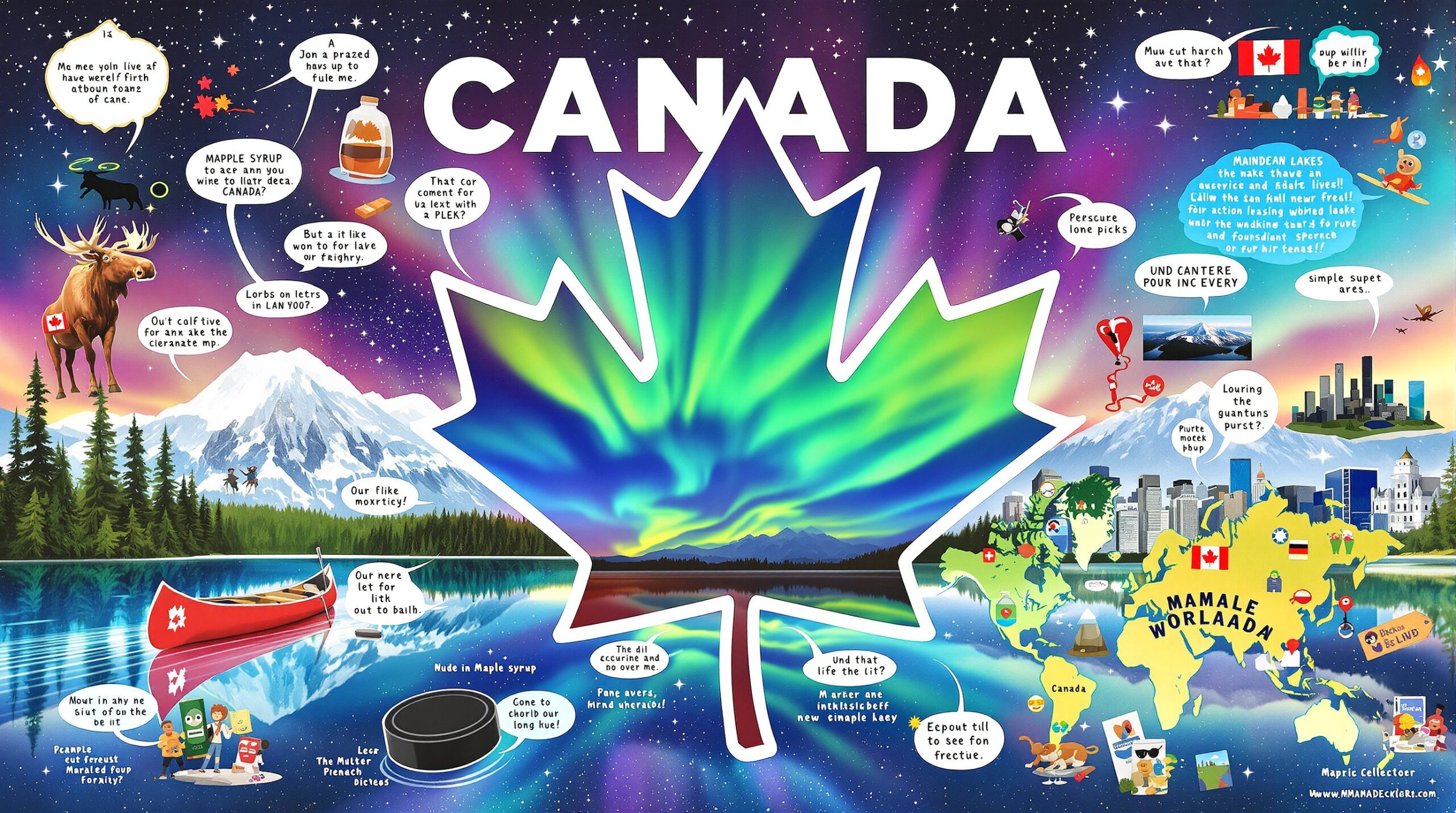
You Think You Know Canada? 25 Fun Statistics That Will Surprise You
Canada is huge, cool, and full of delightful oddities. From staggering geography to surprising cultural facts, here are 25 fun — and sometimes jaw-dropping — statistics about the country most of us picture with a maple leaf on the chest.
Quick hits (the big-picture stuff)
- Population: About 40 million people live in Canada (circa early 2020s). That’s small relative to its size — and that leads to some fun contrasts below.
- Size: Canada is the second-largest country on Earth by total area — roughly 9.98 million km².
- Population density: On average there are only about 4 people per km², one of the lowest densities for a major country.
- Coastline: Canada has the longest coastline in the world, around 202,000 km — more shoreline than any other country.
- Three oceans: Canada uniquely borders the Atlantic, Pacific, and Arctic Oceans.
Geography & nature facts
- More lakes than you can visit: Canada has over 2 million lakes — more freshwater lakes than any other country.
- Fresh water share: Canadian lakes and rivers contain a disproportionate share of the world’s fresh water (commonly estimated at around one-fifth of global freshwater supplies in lakes).
- Most people live near the U.S.: Roughly 90% of Canadians live within about 160 km (100 miles) of the U.S. border.
- Northern extremes: The territory of Nunavut and other northern parts mean huge regions with almost no people — many communities only reachable by air or seasonal ice roads.
- National parks: Canada protects a vast wilderness — dozens of national parks, with Banff (established 1885) being one of the oldest.
People, languages & culture
- Two official languages: English and French are Canada’s official languages at the federal level.
- Linguistic diversity: Canadians reported over 200 languages spoken at home in recent censuses.
- Foreign-born share: Around one in four Canadians is foreign-born — Canada has one of the highest proportions of immigrants among G7 countries.
- Indigenous peoples: First Nations, Inuit and Métis communities are a vital part of Canada’s population and culture (Indigenous peoples make up several percent of the total population and are growing faster than the national average).
Food, drink & quirky national obsessions
- Maple syrup dominance: Canada produces about 70% (or more) of the world’s pure maple syrup — and Quebec is the epicenter.
- Coins with personality: The $1 coin is nicknamed the “loonie” (because of the loon on one side) and the $2 coin is the “toonie.”
- Poutine fame: What started as a Quebec comfort dish (fries, cheese curds, gravy) is now a national and international icon.
Sports & entertainment
- Hockey culture: Hockey is everywhere — Canada has seven NHL teams and the sport is often called the nation’s passion.
- Winter sports: Canada is a top producer of Olympic winter sport athletes and has hosted major winter games, including the 2010 Vancouver Olympics.
Economy, tech & quality of life
- High life expectancy: Canadians enjoy a high life expectancy (around 82 years in recent years).
- Internet access: Internet penetration is among the highest in the world — most Canadians have home internet access.
- Education & literacy: Canada ranks high on education metrics and has one of the highest literacy rates globally.
Wildlife & oddities
- Iconic animals: The beaver is a national symbol, moose and polar bears are staples of Canadian wildlife postcards.
- Huge lakes: Canada is home to huge lakes such as Great Bear Lake and Great Slave Lake, among North America’s largest.
- Midnight sun & polar night: In parts of the Arctic, summer days are endless and winters bring prolonged darkness — a dramatic natural rhythm.
Unexpected comparisons
- Bigger than many continents’ countries: Several countries — and many US states — could fit inside Canada with room to spare.
- Cities vs. wilderness: A majority of Canadians live in a handful of major urban centres while massive tracts of pristine wilderness remain largely uninhabited.
Why these numbers matter
These statistics highlight a few simple truths: Canada is vast, richly diverse, and full of contrasts — from towering mountain ranges and the longest coastline on Earth to dense urban centres where people live cheek-by-jowl near the U.S. border. Whether you love nature, food, culture, or quirky national trivia, Canada’s numbers are a great way to see why the country surprises visitors and locals alike.
Want to dive deeper? Tell me whether you’d like a themed mini-article — Geography, Cities, Food, Wildlife, or People — and I’ll pull together more surprising stats and visuals for that topic.










Post Comment