You’ll Be Surprised by These 20 Fun Statistics About Canada — From Maple Syrup Supremacy to Coastlines That Never End
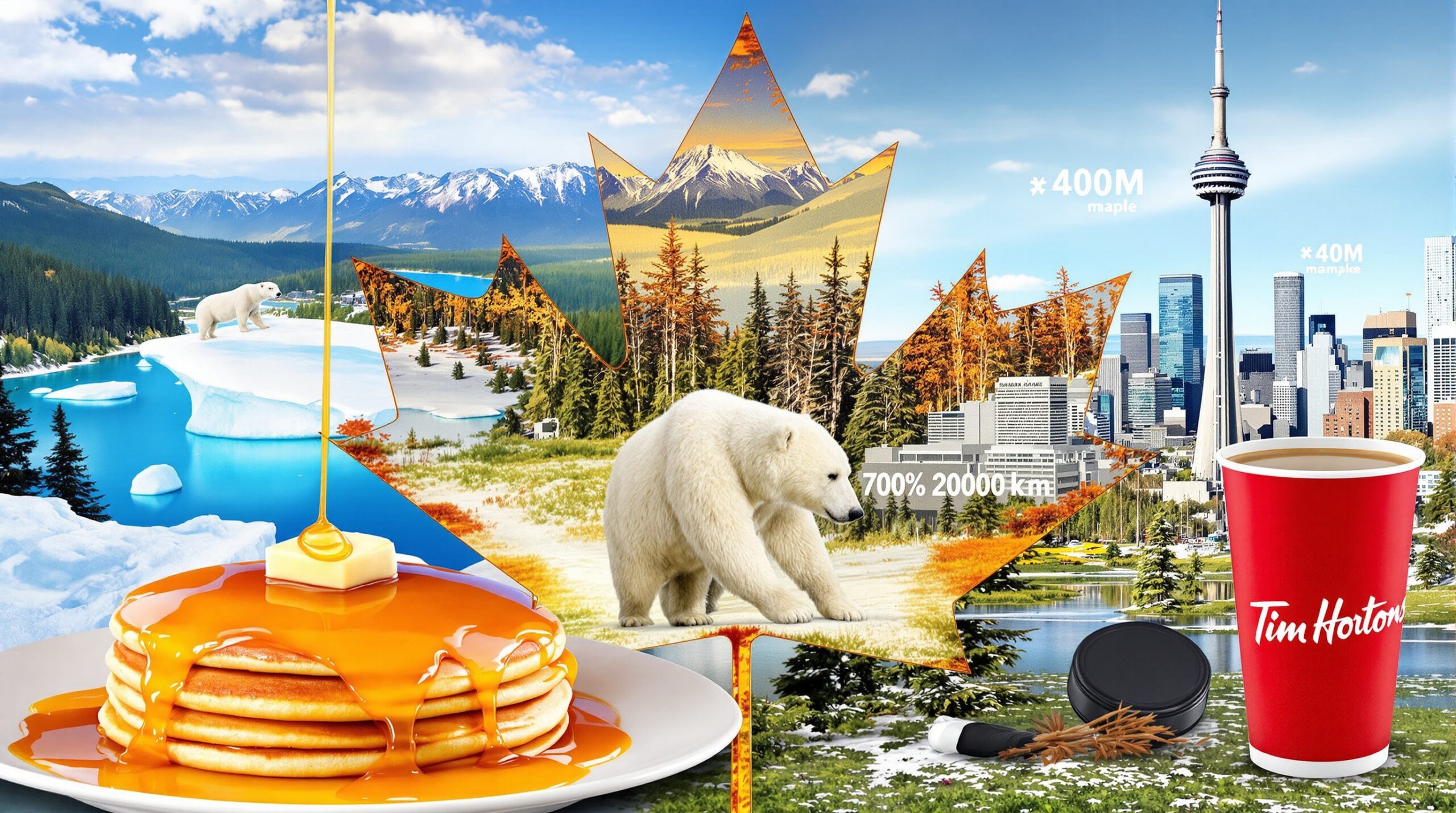
20 Fun (and Surprising) Statistics About Canada
Canada is huge, a little quirky, and full of stats that make you go “wow.” Here are 20 fun facts — numbers, comparisons, and tasty tidbits — that highlight what makes Canada unique. Numbers are rounded or given as ranges where official totals vary by year.
-
Population: about 40 million people
-
Canada’s population is roughly 40 million (early 2024 estimate). That’s spread across a landmass nearly 10 million km² — so there’s a lot of wide-open space per person.
-
Second-largest country by area
-
At roughly 9.98 million km², Canada is the world’s second-largest country by land area, after Russia.
-
Coastline that feels endless: ~202,000 km
-
Canada has the longest coastline of any country, around 202,000 km. That’s a lot of shorelines — from the Atlantic to the Pacific to the Arctic.
-
Lakes galore: over 2 million
-
Canada is often called the land of lakes. There are over 2 million lakes of various sizes, and Canadian lakes hold roughly 20% of the world’s freshwater.
-
Maple syrup dominance
-
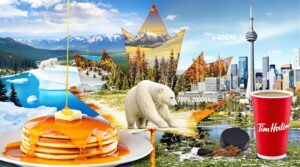
Quebec produces about 70–75% of the world’s maple syrup, and Canada is by far the largest maple syrup producer globally.
-
Polar bear capital
-
Canada is home to roughly 60% of the world’s wild polar bears, with large populations around Hudson Bay and the Arctic Archipelago.
-
The CN Tower stands tall
-
Toronto’s CN Tower is 553.3 meters tall. It was the world’s tallest free-standing structure from 1975 to 2007 and remains an iconic skyline landmark.
-
Great Bear Lake: a giant of freshwater
-
Great Bear Lake in the Northwest Territories is the largest lake entirely within Canada (about 31,000 km²).
-
Six time zones (including a half-hour)
-
Canada spans six time zones: Pacific, Mountain, Central, Eastern, Atlantic, and Newfoundland — with Newfoundland time offset by a half-hour.
-
Two official languages — and many more spoken
-
English and French are official. Tens of thousands of people speak Indigenous languages, and census data shows hundreds of mother tongues reported across the country.
-
Bilingual Canadians
-
Around 17–20% of Canadians can carry on a conversation in both English and French (varies by census year and measures used).
-
Immigration is a major part of the population mix
-
Canada is one of the world’s most immigrant-friendly countries; roughly 1 in 4 Canadians were born outside the country (depending on the year and metrics used).
-
Forest cover: a lot of trees
-
Forests cover about 30–40% of Canada’s land area (commonly quoted as about 30–38%), dominated by vast boreal forests.
-
National parks and protected spaces
-
Parks Canada manages dozens of national parks and reserves (around 40–50), plus many provincial parks and protected areas that preserve huge tracts of wilderness.
-
Tim Hortons and the coffee culture
-
Tim Hortons, founded in 1964, is a cultural staple. There are several thousand Tim Hortons outlets in Canada, making it a ubiquitous stop for coffee and doughnuts.
-
Hockey fever
-
Hockey is the most popular winter sport and a cultural touchstone. Youth and amateur participation numbers are large, and the NHL has deep Canadian roots.
-
Snow and cold are part of life in many regions
-
Parts of Canada routinely see long, snowy winters. Northern communities experience Arctic conditions with months of cold and polar night phenomena.
-
A multicultural mosaic
-
Major cities like Toronto and Vancouver are among the world’s most ethnically diverse. In Toronto, over half the population identifies as a visible minority or was born outside Canada.
-
High internet access
-
Around 90–95% of Canadian households have home internet access, reflecting widespread connectivity across urban and many rural areas.
-
A strong producer of natural resources
-
Canada is a global leader in several resource sectors: forestry, minerals, oil and gas, and agricultural products — all important parts of the economy and regional identities.
Conclusion
These numbers only scratch the surface. Canada’s mix of vast wilderness, multicultural cities, and quirky national obsessions (maple syrup and hockey, we’re looking at you) creates a country full of surprising statistics. Want a deep dive into any of these numbers — maple syrup production by year, provincial population breakdowns, or the exact count of lakes over a certain size? Say which one and I’ll pull together the latest figures.
Sources and notes: figures are rounded and drawn from national statistics agencies and common public sources (Statistics Canada, Natural Resources Canada, Parks Canada, industry reports) — values can vary by year and by how each metric is measured.









Post Comment