20 Wild, Wonderful Things You’ll Pretty Much Only See in Australia (and Why They’re So Aussie)
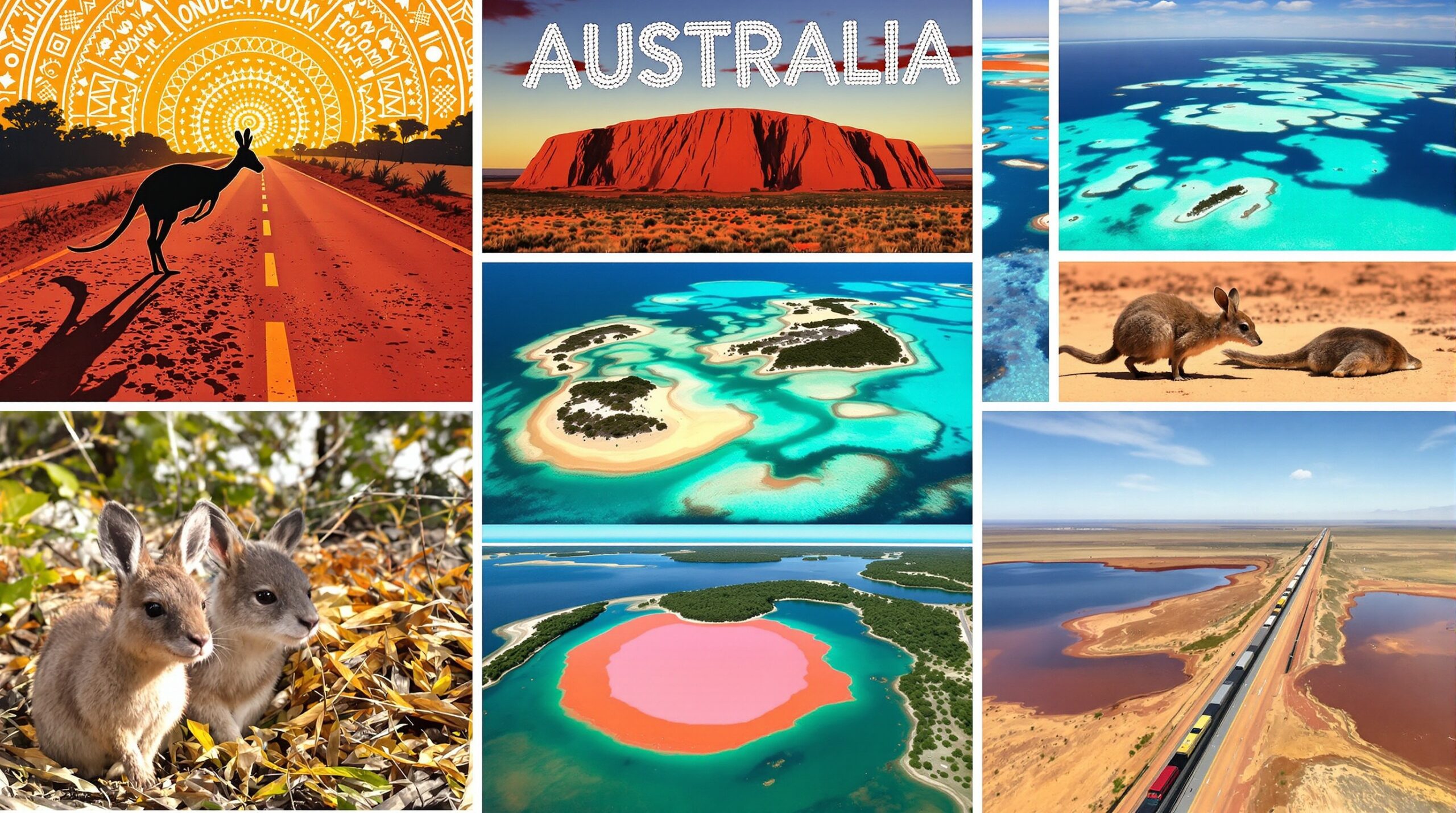
Things That Only (or Almost Only) Happen in Australia
Australia is one of those places where nature, culture and geography conspire to create scenes that feel like they belong to another planet — but they’re real, and you can see them with your own eyes. Here are 20 things that either only happen in Australia or are so distinctively Australian you won’t find their exact match anywhere else.
1) Kangaroos casually crossing the road
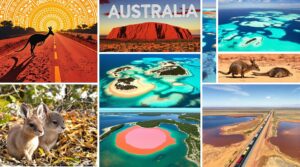
See a mob of kangaroos grazing at dawn and then bounding across the highway? That everyday surrealism — road signs with bouncing kangaroos, night-time “roo” collisions, and whole fences designed to keep macropods out of farmland — is uniquely Australian.
2) Platypus in a gentle creek
The platypus is a monotreme — an egg-laying mammal — found in eastern Australia and Tasmania. Watching one nose around in the riverbank is a once-in-a-life experience that truly belongs to this continent.
3) Echidnas poking around the garden
Echidnas (spiny anteaters) are another monotreme endemic to Australia. They’ll shuffle across lawns and under shrubs with blunt, ancient charm.
4) Quokka selfies on Rottnest Island
The quokka’s famously happy face and approachable nature (Rottnest has rules — don’t feed or harass them) have made it a social-media star — an Australian phenomenon tied to one place.
5) The Tasmanian devil’s growl and survival story
Native to Tasmania, the Tasmanian devil is a uniquely Australian marsupial with a dramatic conservation tale (devil facial tumour disease) and an unmistakable vocal repertoire.
6) The Great Barrier Reef — the world’s biggest coral city
You won’t find a reef system of this size anywhere else: thousands of reefs and islands stretching over 2,300 kilometres off Queensland’s coast. It’s an ecosystem spectacle that’s uniquely Australian in scale.
7) Uluru’s sunrise colour show and cultural weight
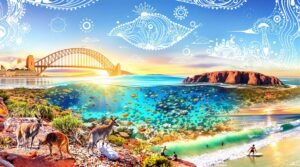
Ayers Rock (Uluru) is more than a photogenic monolith — it’s a living cultural landscape for the Anangu people. The deep-red stone that seems to glow at dawn and dusk is one of Australia’s most iconic sights.
8) Lake Hillier and other famous pink lakes
While pink lakes exist elsewhere, some of the most famous bubble-gum-pink lakes (Lake Hillier on Middle Island, Hutt Lagoon, Lake MacDonnell) are Australian and make a striking, almost surreal photographic motif.
9) Lyrebirds mimicking a chainsaw (and everything else)
Lyrebirds are endemic to Australia and take mimicry to ridiculous extremes — other birds, camera shutters, car alarms, even chainsaws. Hearing one in the forest is unforgettable.
10) Road trains tearing across the Outback
Those impossibly long multi-trailer trucks — road trains — hauling supplies across desert distances are a peculiarly Australian logistical sight tied to the vastness of the Outback.
11) The Nullarbor Links — the world’s longest golf course
Stretched across roughly 1,365 kilometres of the Nullarbor Plain, this par-for-the-road novelty is a road-trip golf experience you’ll only find here.
12) The Dingo Fence — a fence the size of a country
Built to keep dingoes away from sheep country, the Dingo Fence (or Dog Fence) runs for thousands of kilometres in southern Australia. Its sheer scale is a uniquely Australian response to a local problem.
13) Aussie rules football (AFL) mania
Australian Rules Football is a sport born in Australia and fiercely followed there. The rules, the culture, the oval fields and packed stadiums on a Saturday afternoon are unmistakably Aussie.
14) Barbecues at Christmas — prawns and Pavlova in summer
Christmas Day under a blazing sun, cheek-by-jowl with the beach and a shrimp on the barbie? That summertime Christmas combo — pavlova and prawns included — is quintessentially Australian.
15) Venomous marine and land-life you’d rather admire from afar
Box jellyfish, blue-ringed octopus, funnel-web spiders and numerous highly venomous snakes aren’t all unique to Australia in the absolute sense, but Australia’s diversity and prominence of dangerous species is striking and part of the national lore.
16) Coral cay islands dotted like a necklace off a sunburnt coast
Tiny coral islands you can walk around in an hour or kayak between — these low-lying cays are characteristic of Australian tropical coasts and the reef systems that fringe them.
17) Aboriginal fire-stick farming and ancient land management
Mosaic burning practices used by Aboriginal peoples for millennia to manage country, promote biodiversity and reduce wildfire intensity are part of Australia’s ancient, locally adapted land stewardship. The ideas behind them are now influencing global conservation thinking.
18) Cassowaries in the tropical rainforest (northeast Australia)
These large, flightless, dinosaur-like birds are mostly found in far-north Queensland (and New Guinea) and are both rare and awe-inspiring. Seeing one in the wild is a rainforest-exclusive experience in Australia.
19) The Sydney Harbour skyline with the Opera House and Harbour Bridge
You can see harbours elsewhere, but the visual shorthand of a white-sailed Opera House framed by the Harbour Bridge and city lights is uniquely tied to Sydney and instantly recognisable worldwide.
20) A deep, ongoing love affair with the beach
From Bondi to the Bight, Australian beach culture — lifeguard flags, surf lifesavers on stilts, weekend barbies, and little beachside kiosks — is a social phenomenon that’s woven through national life in a way that feels uniquely Aussie.
Why does Australia have so many “only-here” things? Geography, deep evolutionary isolation, enormous interior distances and a climate range from tropical to temperate gave plants and animals time to follow strange evolutionary paths. Add human cultural adaptations to that landscape — Indigenous knowledge, colonial history, and remote lifestyles — and you get a long list of experiences that feel impossible anywhere else.
Want to turn this list into a road trip? I can map a two-week itinerary that hits a handful of these highlights (wildlife, reef, Uluru, Rottnest, and the Nullarbor) depending on how adventurous you’re feeling.







Post Comment